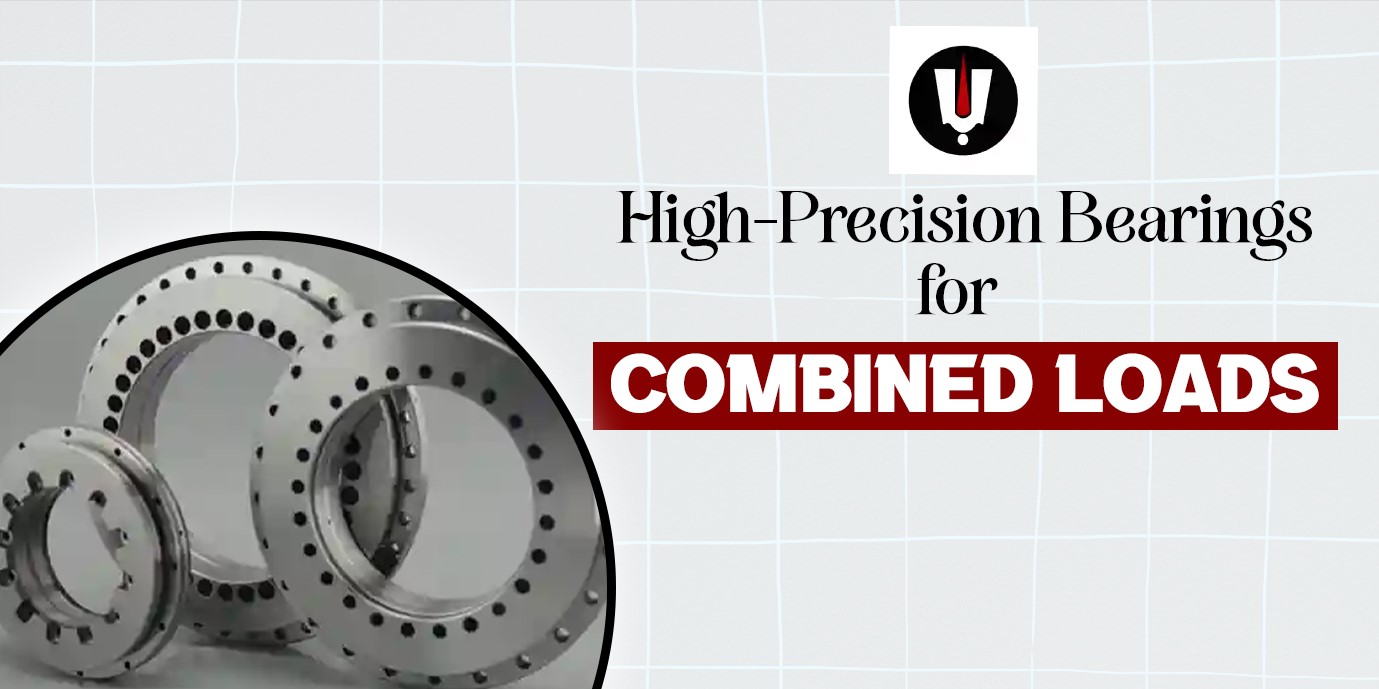
Modern industrial machinery operates under complex force conditions where bearings must handle radial and axial loads simultaneously. In such demanding environments, high-precision bearings for combined loads play a crucial role in ensuring accuracy, stability, and long-term reliability.
What Are High-Precision Bearings for Combined Loads?
High-precision bearings for combined loads are specially engineered rolling bearings designed to support both radial (perpendicular) and axial (parallel) forces at the same time. These bearings are manufactured with tight dimensional tolerances, advanced materials, and optimized internal geometry to deliver precise motion and load stability. They are commonly used in equipment where even minor misalignment or vibration can impact performance, accuracy, and product quality.
Why Combined Load Capability Is Important
In real-world applications, bearings rarely experience a single type of force. Combined loads occur due to:
- Gear meshing and torque transmission
- Cutting, pressing, or thrust forces
- Belt and chain tension
- High-speed rotational dynamics
High-precision bearings for combined loads ensure:
- Accurate shaft positioning
- Stable rotational performance
- Reduced vibration and noise
- Lower wear and extended service life
Types of High-Precision Bearings for Combined Loads
1. Angular Contact Ball Bearings:
These are among the most widely used high-precision bearings for combined loads.
Key characteristics:- Designed to handle both axial and radial loads
- Available in single-row, double-row, and matched pair configurations
- High-speed and low-friction operation
Machine tool spindles, servo motors, pumps, compressors
2. Tapered Roller Bearings:
Tapered roller bearings are ideal for heavy combined load applications.
Key characteristics:- High stiffness and load capacity
- Excellent axial load handling
- Long operational life under heavy stress
Gearboxes, rolling mills, automotive transmissions, construction equipment
3. Spherical Roller Bearings:
These bearings accommodate combined loads while allowing misalignment.
Key characteristics:- Self-aligning capability
- High radial and axial load capacity
- Suitable for harsh environments
Mining equipment, crushers, conveyors, wind turbines
4. Four-Point Contact Ball Bearings:
Four-point contact bearings are compact solutions for combined loads.
Key characteristics:- Axial load capacity in both directions
- Space-saving design
- Reduced bearing arrangement complexity
Robotics, slewing drives, indexing tables, aerospace systems
5. Cylindrical Roller Bearings with Thrust Elements:
When combined with thrust bearings, cylindrical roller bearings offer precision under combined loads.
Typical applications:Heavy-duty machine tools, industrial drive systems
Key Benefits of High-Precision Bearings for Combined Loads
- High Accuracy and Rotational Stability: Precision manufacturing minimizes runout and maintains consistent shaft alignment.
- Superior Load Distribution: Optimized raceway geometry ensures even load sharing, reducing localized stress.
- Reduced Friction and Heat Generation: Lower friction improves efficiency and prevents overheating.
- Extended Equipment Life: Reduced wear results in longer bearing and machine life.
- Improved Machine Performance: Stable bearings improve product quality, process consistency, and operational safety.
Industrial Applications
High-precision bearings for combined loads are critical in:
- CNC machine tools
- Robotics and automation systems
- Automotive and electric vehicle drivetrains
- Steel and non-ferrous metal rolling mills
- Wind energy and power generation
- Aerospace and defense equipment
In these industries, precision bearings directly impact productivity and reliability.
How to Select the Right High-Precision Bearing
Key selection factors include:
- Magnitude and direction of loads
- Required precision class and speed
- Operating temperature and environment
- Shaft alignment and housing design
- Lubrication method and maintenance needs
Proper selection ensures optimal performance and long-term cost efficiency.
Conclusion
High-precision bearings for combined loads are essential components in modern machinery where accuracy, durability, and performance are non-negotiable. By effectively managing both radial and axial forces, these bearings ensure smooth operation, reduced maintenance, and extended equipment life. Selecting the right bearing solution helps industries achieve higher efficiency, improved reliability, and consistent output quality.
At Balaji Bearing India, we help you select the right High-Precision Bearings for Combined Load for demanding applications. Get in touch with our experts for dependable and efficient solutions.
Talk to Our Experts for High-Precision Bearings for Combined Loads Requirements
Email: balajibearingco.16@gmail.com
Website: https://balajibearingindia.in/