Pillow Block Bearing
Pillow Block Bearings are mounted bearing units designed to support and guide rotating shafts while providing reliable operation in industrial machinery. They combine a bearing insert with a rigid housing, making installation easier than using a separate bearing and housing arrangement.
Pillow block bearings are widely used in conveyor systems, material handling equipment, agricultural machinery, industrial fans, processing machines, packaging equipment and general mechanical applications where a rotating shaft requires stable and properly aligned support.
Pillow Block Bearings
A pillow block bearing consists of a bearing mounted inside a housing. The housing can be securely fixed to a machine frame, while the bearing supports the rotating shaft.
Depending on the application, pillow block bearing units are available with different. Bore sizes, housing materials, sealing arrangements, shaft-locking methods and duty ratings.
They are particularly useful when straightforward installation, shaft support and easy maintenance are important.
Key Features
- Supports rotating shafts securely
- Simple mounting and installation
- Available in different bore sizes
- Rigid housing for industrial applications
- Suitable for continuous shaft rotation
- Available with set-screw shaft locking
- Sealed designs help protect against contaminants
- Grease nipple options allow convenient lubrication
- Suitable for light-duty and general industrial applications
- Available in cast iron and other housing configurations
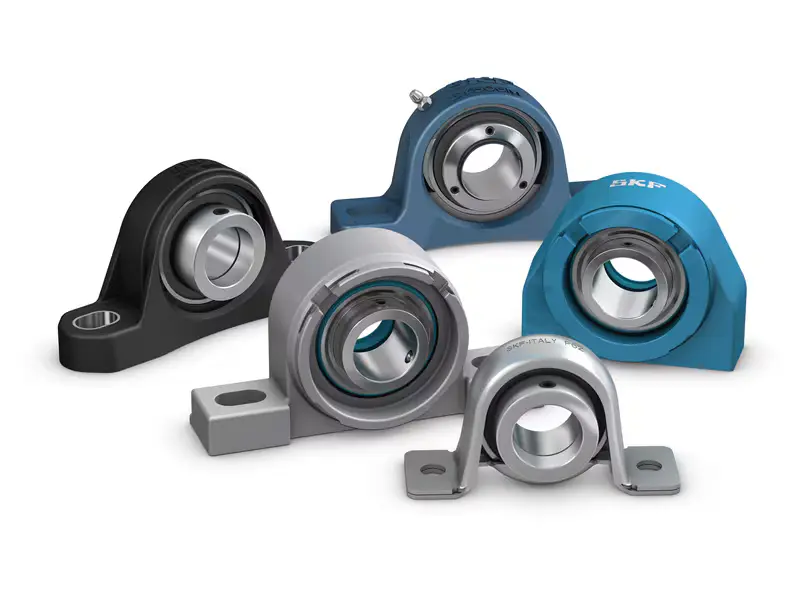
What Is a Pillow Block Bearing?
A pillow block bearing is a mounted bearing assembly consisting of a bearing insert installed inside a housing that can be bolted to a machine structure.
The bearing allows a shaft to rotate while the housing provides structural support. This arrangement reduces the complexity of mounting a bearing directly into a machine component.
Pillow block bearings are commonly selected for applications where the shaft is supported externally and the bearing unit needs to be securely mounted to a flat surface.
In simple terms: a pillow block bearing supports a rotating shaft and provides a convenient mounting arrangement for industrial machinery.
How Does a Pillow Block Bearing Work?
The working principle is straightforward:
-
1. The bearing insert is positioned inside the housing.
2. The housing is fixed to the machine frame using mounting bolts.
3. The rotating shaft passes through the bearing bore.
4. The bearing's rolling elements reduce friction between the shaft and stationary housing.
5. The shaft can rotate while the housing remains securely fixed.
6. Seals help retain lubricant and reduce the entry of dust and contaminants.
In applications using a set-screw locking mechanism, the bearing is secured to the shaft by tightening set screws against the shaft surface.
Correct shaft fit, alignment, lubrication and mounting torque are important for achieving dependable bearing performance.
Pillow Block Bearing Construction
A typical pillow block bearing unit contains several important components.
- Bearing Insert: The bearing insert contains the rolling elements, raceways and other internal components required to support rotational movement.
- Housing: The housing holds the bearing insert and provides mounting points for fixing the unit to the machine structure.
Housing materials can vary according to application requirements. Cast iron is commonly used where a rigid and durable housing is required. - Seal: The sealing arrangement helps protect internal bearing components from dust, dirt and other contaminants while helping retain lubricant.
- Shaft Locking Mechanism: A set-screw arrangement can be used to secure the bearing to the shaft. This provides a practical solution for many industrial shaft-support applications.
- Grease Nipple: Some pillow block units include a grease nipple, allowing lubricant to be replenished without completely removing the bearing assembly.
Pillow Block Bearing Product Specifications
The following specifications represent available product configurations:
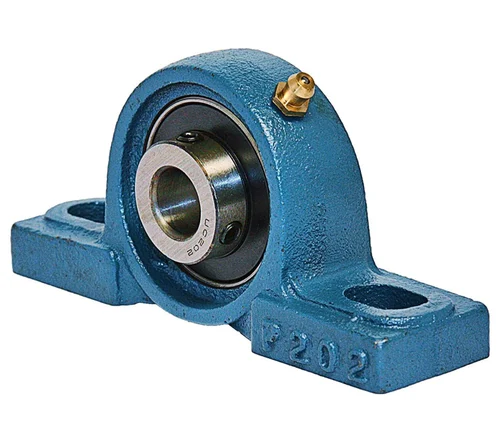
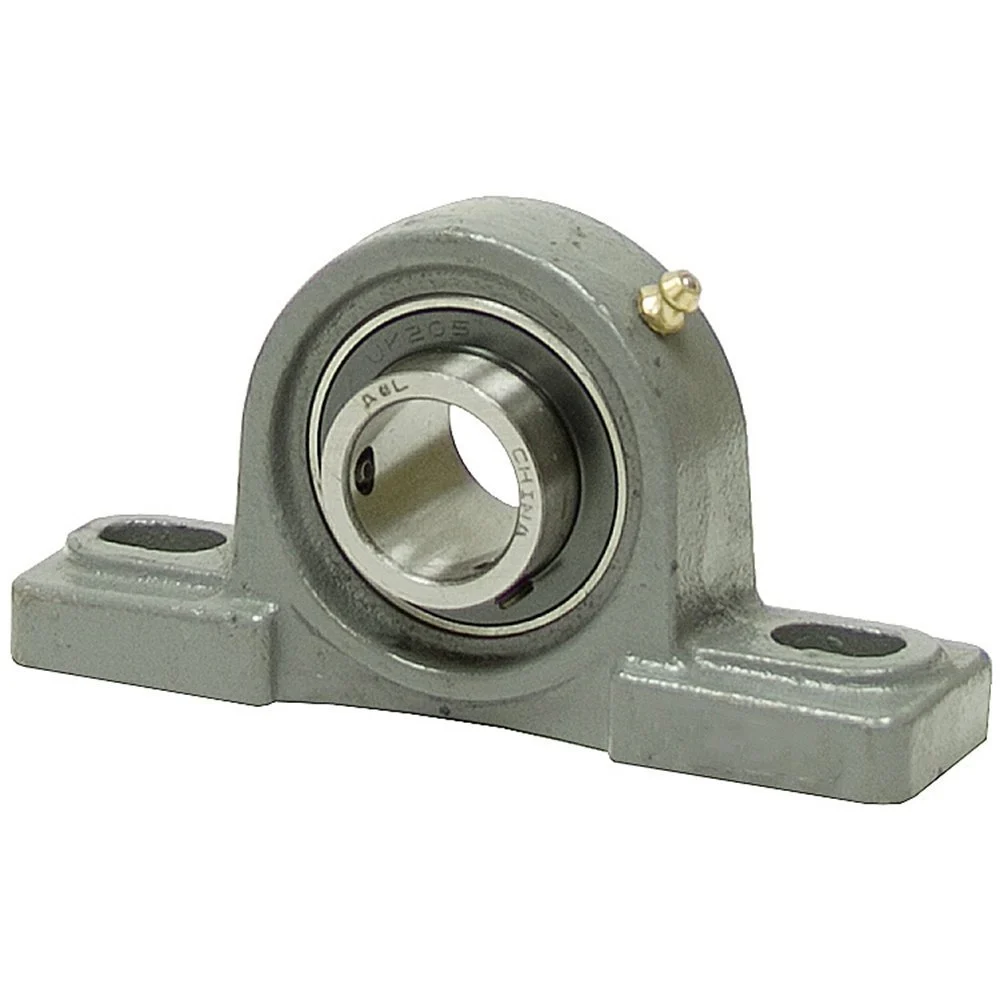
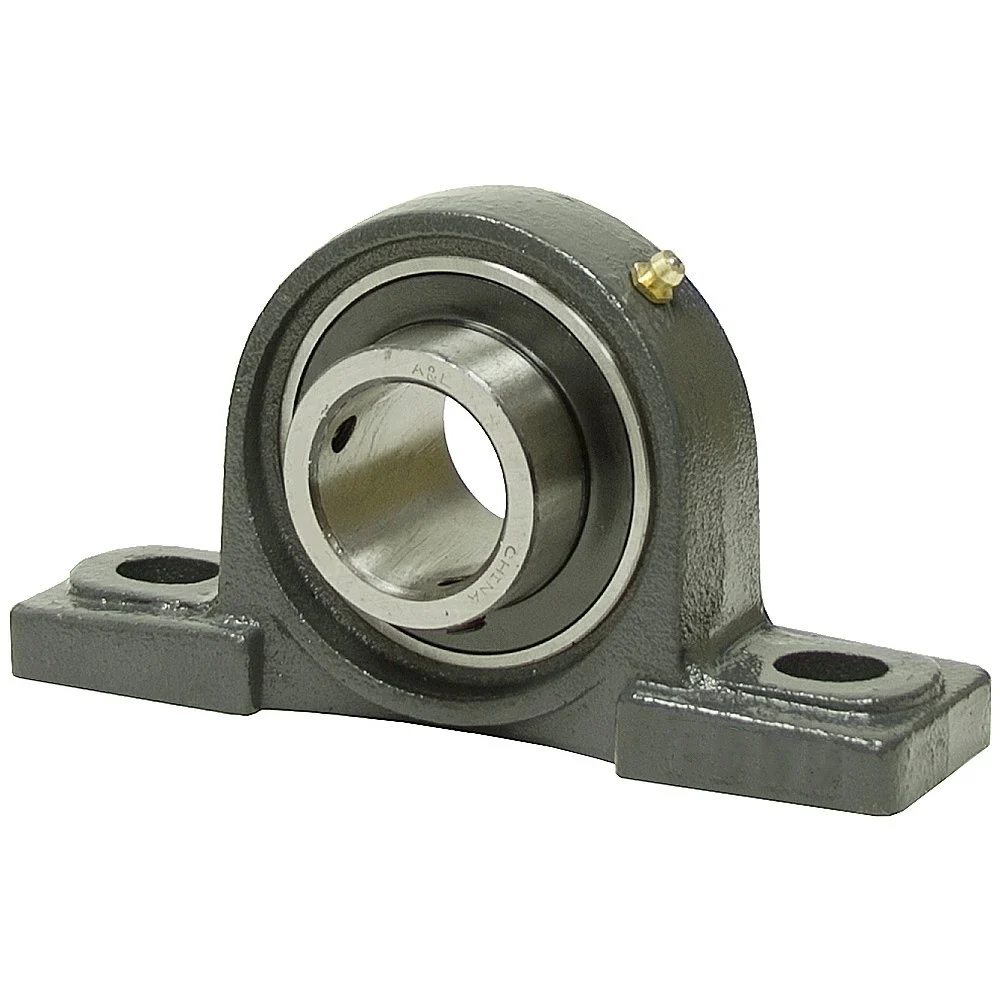
Ucp211-J7 Pillow Block Bearing
| Product Parameter | Specification |
|---|---|
| Bore Size | 40.0 mm |
| Material | Mild Steel |
| Packaging Type | Box |
| Usage/Application | Industrial |
| Feature | Designed to support a rotating shaft |
| Finishing | Color Coated |
| Country of Origin | Made in India |
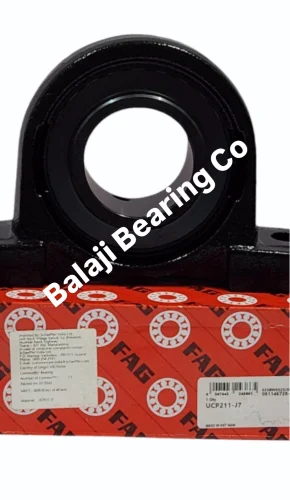
Ucp211-J7 Pillow Block Bearing
| Product Parameter | Specification |
|---|---|
| Bore Size | 15 mm |
| Block Material | Cast Iron |
| Bearing Series | UCP |
| Sealing Type | Double Seal |
| Shaft Fit | Set Screw |
| Country of Origin | India |
| Duty Rating | Light Duty |
| Center Height | 25 mm |
| Grease Nipple | With Nipple |
Note: Bearing dimensions, load capacity, speed capability and operating conditions should be verified against the specific bearing model and application before selection.
Types of Pillow Block Bearings
Pillow block bearings are available in different configurations to meet varying shaft-support requirements.
- UCP Pillow Block Bearings: UCP is a widely used pillow block bearing series. These units generally combine a housing with an insert bearing and are commonly used for industrial shaft-support applications.
- Set-Screw Pillow Block Bearings: Set-screw pillow blocks use screws to secure the bearing to the shaft. They are practical where a straightforward shaft-locking method is required.
- Sealed Pillow Block Bearings: Sealed configurations help protect the internal bearing mechanism from contaminants and help retain lubricant.
- Heavy-Duty Pillow Block Bearings: Heavy-duty units are selected for applications involving higher loads, demanding operating environments or continuous industrial operation. Selection should always be based on the manufacturer's load and speed specifications.
Applications of Pillow Block Bearings
Pillow block bearings are used across a wide range of machinery and equipment.
Common applications include:
- Conveyor systems
- Material handling machinery
- Packaging machinery
- Agricultural equipment
- Industrial fans
- Processing equipment
- Textile machinery
- Food-processing machinery
- Manufacturing equipment
- Mechanical transmission systems
- Shaft-driven machinery
- General industrial equipment
Consider a conveyor where a rotating roller shaft must be supported at both ends.
Instead of machining bearing housings directly into the machine frame, pillow block units can be mounted externally. This can simplify installation, inspection and bearing replacement.
The correct bearing should be selected according to the shaft diameter, radial load, rotational speed, environment and required service conditions.
Advantages of Pillow Block Bearings
Pillow block bearings are popular because they provide several practical benefits.
- Easy Installation: The mounted housing provides a convenient way to secure the bearing to a machine frame.
- Simple Replacement: When maintenance is required, the mounted unit can generally be accessed and replaced more easily than an integrated bearing arrangement.
- Reliable Shaft Support: The bearing provides controlled support for rotating shafts and helps reduce friction during operation.
- Flexible Application: Different bore sizes, housing designs, sealing arrangements and locking mechanisms allow pillow block bearings to be used across many machine designs.
- Convenient Lubrication: Models equipped with a grease nipple allow lubrication to be performed without removing the complete bearing assembly.
How to Select the Right Pillow Block Bearing
Choosing the correct pillow block bearing requires more than matching the bore diameter.
Consider these factors:
-
1. Shaft Diameter: The bearing bore must match the shaft size or the specified shaft-fit requirement.
For example, a 15 mm bore bearing is suitable only when the application and shaft dimensions correspond to the bearing specification.
2. Load: Determine the radial and, where applicable, axial loads acting on the bearing.
Higher loads may require a bearing with an appropriate load rating and stronger housing.
3. Rotational Speed: Check the bearing's recommended speed range. High-speed applications require particular attention to lubrication, heat generation and bearing design.
4. Operating Environment: Dust, moisture, chemicals, temperature and vibration can influence bearing selection.
A suitable sealing arrangement is especially important in contaminated environments.
5. Locking Method: Set-screw locking is a common choice for pillow block applications. Other locking arrangements may be appropriate for specific shaft designs.
6. Lubrication Requirements: If routine relubrication is required, a pillow block unit equipped with a grease nipple can simplify maintenance.
7. Housing Material: Cast iron housings are commonly selected where rigidity and durability are important. Other materials may be selected according to the application.
Pillow Block Bearing Installation Tips
Correct installation is essential for achieving the expected bearing life.
Follow these practical guidelines:
-
1. Clean the shaft and mounting surface before installation.
2. Check the shaft diameter and surface condition.
3. Position the housing correctly on the mounting surface.
4. Align the shaft and bearing unit carefully.
5. Tighten mounting bolts evenly.
6. Secure the bearing to the shaft according to the specified locking method.
7. Avoid excessive force during installation.
8. Lubricate the bearing according to its manufacturer's recommendations.
9. Rotate the shaft manually after installation to check for abnormal resistance.
10. Monitor temperature, noise and vibration during initial operation.
Improper alignment or excessive tightening can create unnecessary bearing loads and may shorten service life.
Pillow Block Bearing Maintenance
Routine maintenance helps identify problems before they cause unexpected machine downtime.
Inspect Regularly
Check for:
- Unusual noise
- Excessive vibration
- Increased operating temperature
- Lubricant leakage
- Loose mounting bolts
- Shaft movement
- Seal damage
- Housing cracks or damage
Lubrication should follow the bearing manufacturer's recommendations. Over-greasing can be just as undesirable as insufficient lubrication because excess grease may increase operating temperature and resistance.
For units with a grease nipple, use the recommended lubricant and lubrication interval for the specific bearing and operating conditions.
Expert Tips for Better Bearing Selection
For industrial applications, selecting a bearing only by bore size is not enough.
An experienced selection process should evaluate:
- Shaft diameter
- Radial load
- Axial load
- Operating speed
- Temperature
- Contamination level
- Lubrication method
- Mounting arrangement
- Shaft fit
- Required service life
- Maintenance accessibility
For example, the 15 mm UCP pillow block configuration with cast iron housing, double sealing, set-screw shaft fit and grease nipple is positioned as a light-duty configuration. The actual suitability should still be confirmed against the machine's load, speed and environmental requirements.
Frequently Asked Questions About Pillow Block Bearings
A pillow block bearing is used to support a rotating shaft while providing a convenient housing that can be securely mounted to a machine frame.
A UCP pillow block bearing is a mounted bearing configuration commonly consisting of a bearing insert housed in a pedestal-style housing. It is widely used for shaft-support applications.
A standard bearing is generally an individual bearing component, while a pillow block bearing is a mounted unit that combines a bearing insert with a housing for easier installation.
A set screw is a locking mechanism used to secure the bearing insert to the rotating shaft. It helps prevent relative movement between the shaft and bearing inner ring.
Yes. Pillow block bearings are widely used in industrial machinery, conveyors, material-handling equipment, processing machinery and other shaft-support applications. The specific bearing must be selected according to load, speed, environment and mounting requirements.
Housing materials vary by design.Cast iron is a common housing material, while other configurations may use mild steel or different engineered materials depending on the product.
A double-seal configuration uses sealing on both sides of the bearing to help retain lubricant and protect the internal components from external contaminants.
Many pillow block bearings require periodic lubrication, depending on their design and operating conditions. Models equipped with a grease nipple allow lubricant to be replenished conveniently.
Start with the shaft diameter and then evaluate load, speed, operating temperature, contamination, sealing, housing configuration and lubrication requirements. Always verify the complete bearing specification before purchasing.
Center height is the distance from the mounting surface to the centerline of the bearing bore. For the specified 15 mm UCP configuration, the center height is 25 mm.
Why Choose the Right Pillow Block Bearing?
A pillow block bearing directly affects shaft support, machine reliability and maintenance requirements. The correct selection can help maintain smooth shaft rotation and reduce avoidable mechanical problems.
Rather than selecting a bearing based only on price or bore size, compare the complete specification with your machine's operating requirements.
For industrial applications, factors such as bearing series, housing material, sealing type, shaft fit, load, speed and lubrication method should be considered together.
Conclusion
Pillow Block Bearings provide a practical and reliable method of supporting rotating shafts in industrial machinery. Their integrated housing simplifies mounting, while different bore sizes, sealing arrangements, housing materials and shaft-locking methods make them suitable for a wide range of applications.
The available configurations include a 40.0 mm bore mild-steel industrial pillow block bearing and a 15 mm UCP pillow block bearing with cast iron housing, double seal, set-screw shaft fit, 25 mm center height and grease nipple.
For the best performance, always match the bearing to the shaft diameter, load, speed, operating environment and maintenance requirements.
Get the Right Pillow Block Bearing for Your Application
Looking for a pillow block bearing for industrial machinery?
Share your shaft diameter, application, operating conditions and required quantity to identify a suitable bearing configuration for your equipment.
Contact us for pillow block bearing specifications, product availability and industrial bearing requirements.