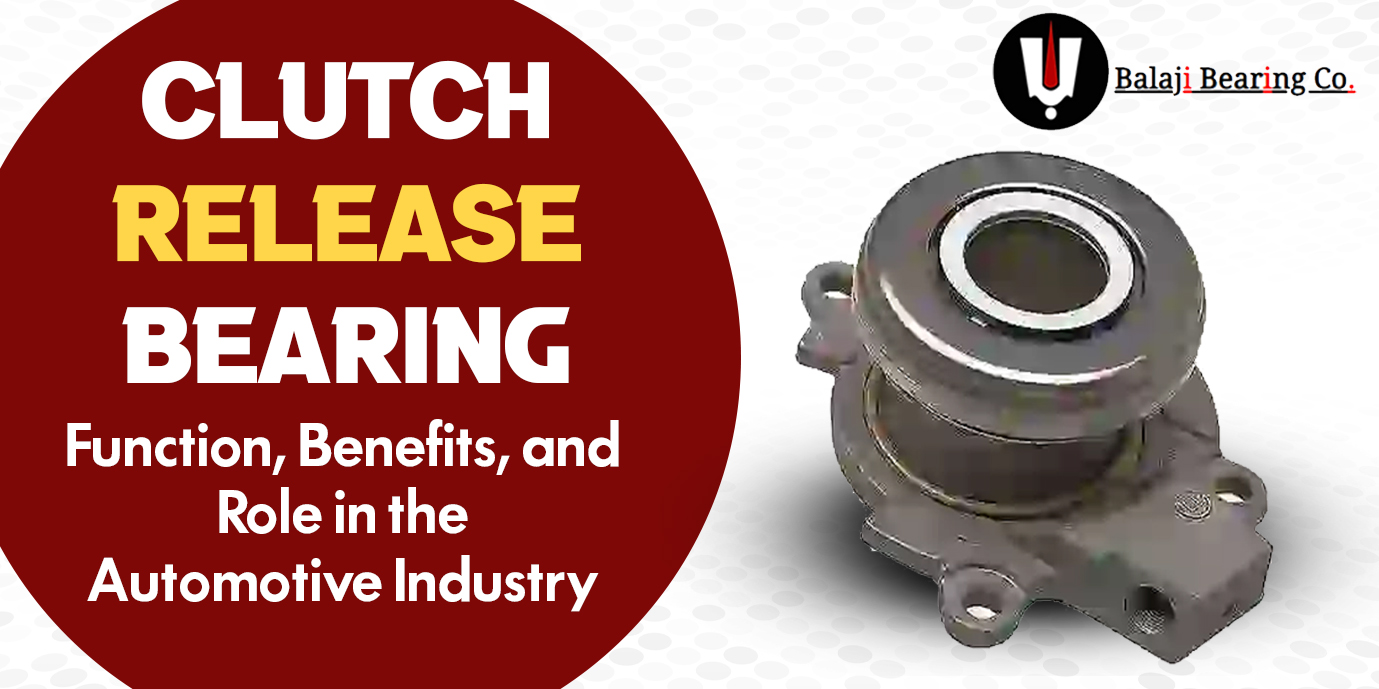
A Clutch Release Bearing is one of the most important components in a vehicle’s clutch system, yet it is often overlooked because it works silently inside the transmission. Whether in passenger cars, commercial trucks, construction vehicles, or heavy-duty machinery, this bearing ensures smooth engagement between the engine and the transmission, allowing vehicles to start, stop, and shift gears safely and efficiently. With growing demand for reliability and performance, clutch release bearings have become essential in supporting modern automotive systems and industrial applications. In this blog, we will explore what a clutch release bearing is, how it works, the materials and technologies used in its manufacturing, its advantages in the automotive industry, and the challenges and future trends shaping its development.
1. What is a Clutch Release Bearing and What is Its Function?
A Clutch Release Bearing, also known as a throw-out bearing, is a precision-engineered bearing located between the clutch pedal mechanism and the pressure plate of the clutch system. Its primary role is to engage and disengage the clutch smoothly when the driver presses the pedal.
When you press the clutch pedal, the bearing applies pressure to the diaphragm spring of the clutch. This action disconnects the engine from the transmission, allowing the driver to shift gears without grinding or damaging internal parts. When the pedal is released, the bearing moves back and the clutch re-engages, transferring power back to the wheels.
In short, the clutch release bearing ensures:
- Smooth gear shifting
- Reduced vibration
- Lower friction
- Longer clutch life
Without a properly functioning bearing, drivers may experience noise, jerking gear shifts, or even total clutch failure.
2. How a Clutch Release Bearing Works
The operation of a clutch release bearing is based on precision movement and friction control. When the clutch pedal is pressed, a hydraulic or mechanical linkage pushes the bearing toward the rotating pressure plate. The bearing must rotate at engine speed while maintaining smooth contact with the clutch spring.
This requires high-quality materials, strong load capacity, and excellent lubrication. Because the bearing operates under high temperature and continuous rotational force, reliability and durability are critical. High-performance clutch release bearings reduce wear on other clutch components and ensure consistent operation even in demanding driving conditions such as heavy traffic, long-distance travel, or load-bearing applications like trucks and buses.
3. Materials and Technologies in Clutch Release Bearing Manufacturing
Modern Clutch Release Bearings are engineered using advanced materials and technologies to handle extreme loads, pressure, and heat.
Some key materials include:
- High-carbon alloy steel
- Heat-treated chrome steel
- Corrosion-resistant stainless steel
- High-performance polymer cages
- Advanced lubricants and sealing systems
Manufacturers today also use CNC machining, precision grinding, surface hardening, and computer-aided quality testing to ensure consistency and long-term durability.
Sealed bearings prevent dust, oil, moisture, and contaminants from entering, which helps maintain lubrication and reduces maintenance requirements — making them ideal for modern vehicles and heavy-duty machinery.
4. Advantages of Clutch Release Bearings in the Automotive Industry
Clutch Release Bearings offer several mechanical and operational advantages, especially in demanding automotive and industrial environments:
- Smooth clutch engagement
- Reduced wear and tear on clutch components
- Lower vibration and noise levels
- Improved driving comfort and control
- Enhanced transmission safety and reliability
- Long operational life with minimal maintenance
These bearings are commonly used in:
- Passenger cars
- Commercial trucks
- Buses
- Off-highway vehicles
- Material handling equipment
- Agricultural machinery
In industries where vehicles operate continuously, such as logistics, shipping, and construction, reliable clutch release bearings help minimize downtime and reduce operational costs.
5. Challenges and Future Trends-2026
Clutch release bearings play a critical role in ensuring smooth power transmission in automotive and heavy-duty vehicles. However, key challenges include increased wear due to high-temperature operation, contamination from dust or moisture, and the growing demand for longer maintenance cycles. Manufacturers are now focusing on advanced materials, improved sealing technology, and precision engineering to enhance durability and performance. Looking ahead to 2026, the rise of hybrid and commercial vehicles, along with AI-assisted predictive maintenance, will drive innovation in bearing design. This will result in quieter operation, extended service life, and enhanced reliability across diverse driving conditions.
Learn more about selecting a suitable bearing, contact the Balaji Bearing India team today.